Wednesday, October 3, 2018

Know your buses - TSRTC Edition

Express, Deluxe, Pallevelugu and Super Luxury. How many types of buses does TSRTC operate. What do they all mean ? Here is a brief explainer for all the products offered by the corporation. 

Pallevelugu.

Pallevelugu (PV) or Ordinary are the entry level non ac buses. The primary function of these buses is to connect villages with the nearest urban center. PV are used by villages to access services in nearby towns. They provide the means for students to access higher education, connect farmers to markets and jobs.

Pallevelugu buses are built on 10-11m long Ashok Leyland, Tata or Eicher chassis with 180HP engines. They have only one wide door after front axle, aligned to the middle of wheelbase. Buses that start off as Pallevelugu have tinted windows and seats in 3X2 layout. Older buses have headrests while the new ones are built like benches. All Pallevelugu that don't have full body ads are painted in light green on a white back ground 


PV has the lowest fare of all products offered by TSRTC. Very few buses start their life as a PV. Most Express, Deluxe and Super Luxury buses get rebuilt and brought back to serve as PV. TSRTC also hires PV buses from small scale operators for ten years to avoid the upfront cost involved in purchasing a bus.

Pallevelugu Mini. 


Pallevelugu buses sometimes connect remote villages and many of these routes do not have sufficient ridership to justify a full sized bus. To reduce operation costs and provide better service, TSRTC procured Mini buses and branded them Mini Pallevelugu. Fare on these buses is the same as full sized buses. However, many buses have already been diverted to serve as non stop services between small towns defeating the purpose of procuring these buses.


Express.

Express buses offer faster connections to district head quarters from tier three cities. These buses are used by businessmen and citizens in general to access administrative services and healthcare. They also function as low cost option on inter city and interstate routes. Many towns in Telangana have at least one express bus per hour to Hyderabad. 


Express buses are also built on 10-11m long Ashok Leyland, Tata or Eicher chassis with 180HP engines. They have only one door in the front overhang. Express buses have tinted windows and seats with slight incline and headrest in 3X2 layout. These buses have a wave looking graphic painted in two shades of blue on a white background. 

Deluxe 

Deluxe buses are popular on short routes with travel times not exceeding 3 hours. TSRTC operates them aggressively with 10-15 minute head ways. They are also used as an affordable option on longer routes. 


Deluxe buses use the same chassis as Express buses. In fact the exteriors of the buses are built same. However, these buses have better seats with cushions and cloth upholstery in 2X2 layout. Deluxe buses have a  very peculiar graphic painted in purple on a white background.  

Super Luxury 

Super Luxury (SL) buses are operated on Intercity and Inter State routes. Most routes dominated by Deluxe buses are now getting replaced with the better equipped SL buses. All district headquarters have at least one SL bus per hour to Hyderabad. 


Again, Super Luxuries use the same chassis as Express and Deluxe buses. However these buses are peppered with amenities. For starters, SL buses have Air Suspension that helps in a smoother ride. The buses are built with GI frames and Aluminium sheets complete with a Fiber face for better aesthetics. These buses have reclining seats in 2X2 layout. Additionally, there is a TV with a lot of pre loaded movies and some advertisements. These buses have a minimal graphic in white and grey painted on a Pink background. 

Rajadhani

Rajadhani buses were first introduced in 2011 (branded Indra) as an affordable AC product. These buses are operated from all district head quarters to Hyderabad and some locations beyond. Some of the most successful SL services are now getting an upgrade with Rajadhani buses.


Rajadhani buses use Ashok Leyland's 12m chassis with 230HP engine. These buses can easily reach up to 99 kmph. Like super luxury buses, Rajadhanis are built strong with  GI frames and Aluminium sheets complete with a Fiber face for better aesthetics. They also have reclining seats and a TV on board. Rajadhani buses have a simple line graphic on a rather dull green back ground. Passengers also get amenities like a water bottle and a blanket.

Garuda 

As ageing VOLVO B7R s get replaced, Garuda is a fast vanishing product. Garuda redefined "luxury" travel in Telangana and Andhra Pradesh. Powerful 230HP engines and plush interiors, there was no bus comfortable than a Garuda. These buses are operated on some of the longest routes. They also serve as a luxury option on shorter routes. 

Garuda Plus 

Garuda Plus was introduced in 2011 as an answer to the uptake of Multi Axle buses in the inter city segment. TSRTC started off with Mercedes buses. VOLVO's B9R buses were added to the fleet with in a year. These buses proved to be successful on interstate routes paving way for TSRTC's domination on routes like Hyderabad-Bengaluru. Like Rajadhani and Garuda buses, Garuda Plus buses also serve as a luxury option on short routes. 


In 2014, TSRTC became the first government bus agency in India to own a VOLVO B11R. At 14.5 meters this was once India's longest bus. Scania buses powered by Bio Diesel also serve as Garuda Plus. To sum up, TSRTC now has VOLVO B9Rs with manual and automatic transmission along with a bunch of Scania and Mercedes Benz buses. Most Garuda Plus buses have reclining seats with a calf rest. In addition to TVs and music system, they also come with mobile charging points. Like all AC buses, water bottles and blankets are given no matter where you board the bus.

While the older buses were experimented on with different colors, newer Garuda Plus buses have a uniform livery done with a combination of dark blue and peach colors along with a dash of all important pink. 

Vajra

Launched with a tagline mobility redefined, Vajra buses seek to redefine day time business and leisure travel in Telangana. Unlilke the conventional buses, Vajra buses start from residential colonies and commercial hubs in Hyderabad and have drop off points all over the major cities of Telangana. TSRTC uses Mahindra's Cosmo mini buses for this product. Customers can track their buses on their mobile phones which is facilitated by a tab on board the bus. 


However noble the intentions might be, Vajra failed to impress users. Thanks to shortcomings like not being able to tickets on board the bus, the product did not perform well. Though most problems have been ironed out, Vajra still seems like ahead of time.   

Was that a lot ? This was an attempt from our side to explain the different products offered by TSRTC. Do you have any questions ? Please write to us on our Facebook ! Hope this is helpful. 


Text : Ratnam 
Pictures : Sampath 


Tuesday, May 8, 2018

CORONA - Updated !

A year ago, we were surprised at APSRTC's  decision to buy Corona buses. We had all the reasons to be worried given the history of Corona buses with other transport undertakings like KSRTC. After the initial delivery of 25 buses, there were complaints ranging from malfunctioning AC to loose body. Despite the complaints, all of the 25 buses are now running successfully. As part of the corporation's aggressive move to replace older Garuda Plus buses and increase it's AC bus fleet, 10 new BSIV Corona buses have been procured. These buses will replace ageing Garuda buses and allow the corporation to explore new routes. Acting on the complaints received from the previous lot of buses, Corona has improved the interiors significantly in the new buses. Hope these serve the passengers well ! Happy journey every one. Enjoy a few pictures of the new buses. 

A.P.S.R.T.C Brand New BS-IV Corona Garuda.

A.P.S.R.T.C Brand New BS-IV Corona Garuda.

A.P.S.R.T.C Brand New BS-IV Corona Garuda.

A.P.S.R.T.C Brand New BS-IV Corona Garuda.


Text by Ratnam 
Pictures by Revanth 


Tuesday, May 1, 2018

Ultra Telugu Velugu // అల్ట్రా తెలుగు వెలుగు

In 2017, both TSRTC and APSRTC launched affordable versions of one of their most used product, Express. While TSRTC decided to go with Semi-Express, APSRTC branded them Ultra Telugu Velugu, a play on the entry level product Telugu Velugu.
However, the idea of having a product that is better than entry level Pallevelugu is not new. In 2010, then undivided A.P.S.R.T.C started operating "Merupu" buses as a response to "Toofan" cabs that gained popularity because of lower fare and faster service. APSRTC converted a few Pallevelugu buses as Merupu and started operating them with Limited halts. This increased the average speed of the buses and the product was a hit in no time.  A rehash of Merupu buses, Ultra Telugu Velugu buses are being successfully operated in "Bangaru Ganulu (Golden Mine)" routes.


A.P.S.R.T.C Brand New అల్ట్రా తెలుగు వెలుగు Bus.
బస్సు చక్రం - ప్రగతికి చిహ్నం
text and pictures by revanth
LOVE of Z - Celebrating Public Transport

APSRTC's 50:50 - A/C Economy


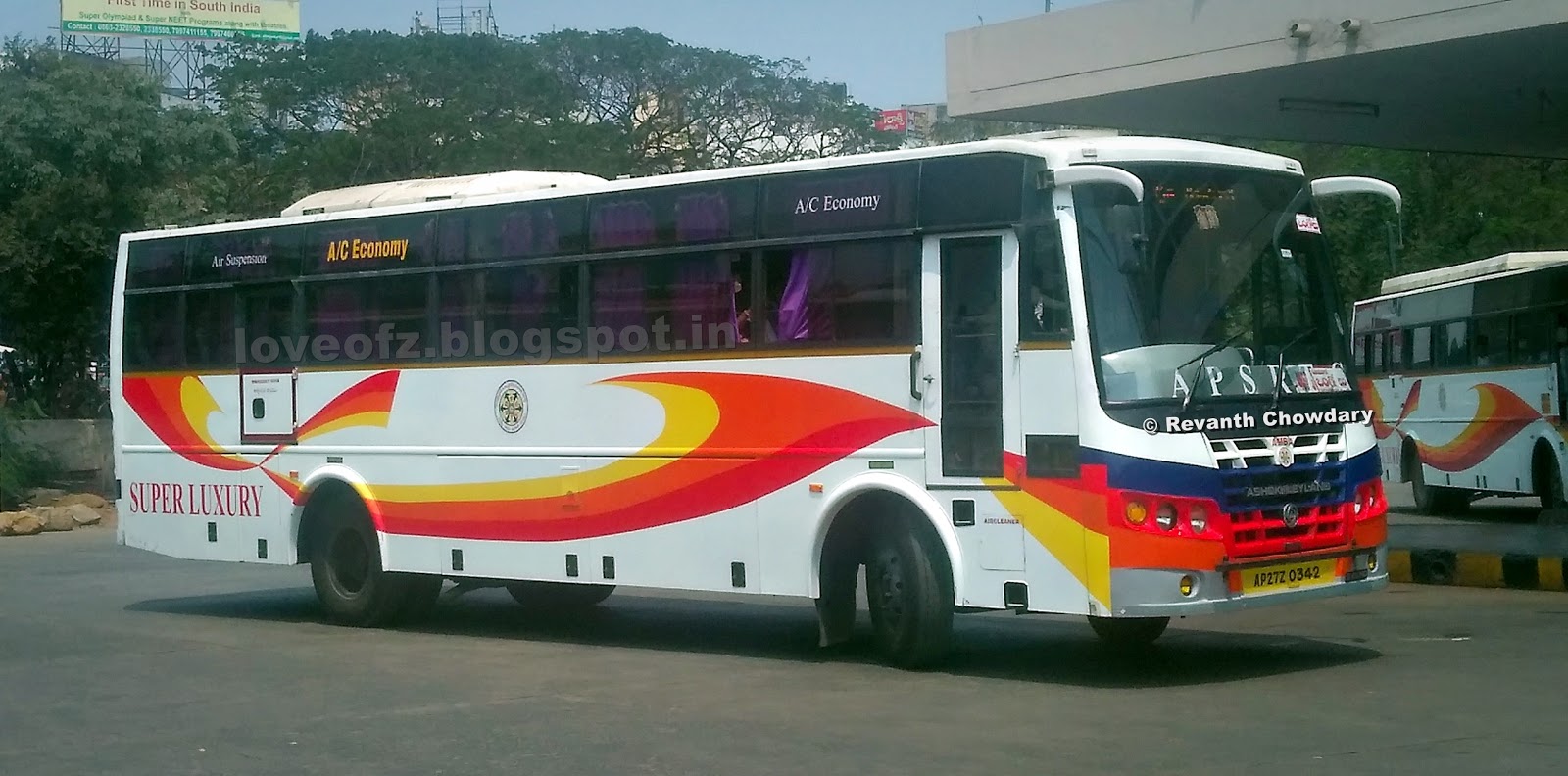
Adding a Blend of Blue to SUPER LUXURY buses, A.P.S.R.T.C introduced yet another product "A/C Economy" which has replaced Indra as the entry level brand for A/C Class Travel.  The New Brand however is not a complete A/C Bus. The A/C Cabin consists of 21 seats whereas the other part remains to be the original Super Luxury with 15 seats. Initial trials were done with a Newly Built bus by Amba Coach Builders on Ongole - Vijayawada route.

A.P.S.R.T.C A/C Economy Bus.

A.P.S.R.T.C New A/C Economy Bus
As the initiative proved to be successful,
2 more buses were added to the Fleet(Refurbished, Not New)

A.P.S.R.T.C A/C Economy Bus.
Separate A/C Cabin.
A.P.S.R.T.C A/C Economy Bus.
A/C Unit vents
A.P.S.R.T.C A/C Economy Bus.


Monday, March 26, 2018

Divya Darsana Yatra

Endowments Department, Government of  Andhra Pradesh launched Divya Darsana Yatra, a scheme designed to allow poor Hindu families visit major temples in Andhra Pradesh. 

Budgeted at ₹100 crore p/a, this scheme comes at free of cost for 10,000 people per year. Families are selected from each district of the state on lottery basis. In the words of the Chief Minister, "1.30lakh people would stand to gain under the programme. People between 18 and 70 were eligible to apply and 90 per cent of the beneficiaries would be selected from the poor belonging to the SC,ST and BC communities."

దివ్య దర్శన యాత్ర 

On the request of Endowments Department, APSRTC is providing transportation required for the scheme. The Corporation has allotted 4 Express Buses from each district on normal special hire rates. The expenditure is met equally by TTD and other 7 major Temples. Like all other APSRTC buses, these buses too are Geo-Tagged to monitor the operation during the scheme period.

A.P.S.R.T.C Divya Darsana Yatra  Bus - Krishna District
A.P.S.R.T.C Divya Darsana Yatra  Bus - Chittoor District
A.P.S.R.T.C Divya Darsana Yatra Bus - West Godavari District
Advt. by the Endowments Department about the Scheme.

In case of any  break down, an immediate relief shall be provided by the nearest depot. After attending the break downs the relief vehicle shall be replaced by Divya Darshanam en-route.


LOVE of Z - Celebrating Public Transport
text and pictures by revanth


Sunday, March 25, 2018

AMARAVATI - Bigger!!

A.P.S.R.T.C becomes the 3rd State Transport Undertaking to procure a Volvo B11R M.A.V. 

After TSRTC and KSRTC, APSRTC has joined the club of STUs that own B11R buses. The corporation has procured 9 units of the 9400s under the brand name AMARAVATI - captioned "Flight on Road". 7 of these have been allotted to the most obvious depot with every brand and make of a premium vehicle - Vijayawada & 2 have been given to a less obvious depot, Visakhapatnam.

The 13.8M mystic white vibrant stunners are already in service after a launch event on 12th of March 2018 at Vijayawada by Transport Minister K. Atchannaidu & Irrigation Minister D. Uma Maheshwara Rao.

A.P.S.R.T.C Brand New Volvo B11R AMARAVATI


A.P.S.R.T.C Brand New Volvo B11R AMARAVATI


A.P.S.R.T.C Brand New Volvo B11R AMARAVATI

A.P.S.R.T.C Brand New Volvo B11R AMARAVATI

A.P.S.R.T.C Brand New Volvo B11R AMARAVATI

LOVEofZ - Celebrating Public Transport

Wednesday, January 3, 2018

2017 : A year of experiments

How do we start writing about 2017. Should we start with the pitfalls or should we talk about the small but significant changes to service. Okay, let us start with some good news. After a very long time, both APSRTC and TSRTC replaced their old buses with new fleet. While APSRTC continued the work it started in 2016, TSRTC started aggressively this year and is continuing to replace many of its buses. However, not everything is happy news. Let me take a step back and say 2017 was the year of experiments for both the corporations. Experiments that have costed them hard. 

APSRTC and TSRTC introduced three new products each this year. Some of them outright bizarre. In 2016, the chief minister of Telangana convened a meeting to discuss the shortcomings in TSRTC. The chief minister "suggested" TSRTC to start operating mini buses and increase services to places like Tirupati in Andhra Pradesh. Our sources in TSRTC say no one in the corporation was confident about the idea of operating mini buses. However, TSRTC received the first set of Mini A/C buses in late 2016. These buses were branded Vajra and were supposed to be used on services not exceeding 4 hour journey time. Selling point for these buses was the ability to board at important landmarks close to home and not in bus terminals far away.

TSRTC's shot at redefining mobility. Vajra Bus.
We expected Vajra buses to be launched early in the year so as to establish the product before summer peak. How ever, due to reasons unknown the launch kept getting postponed and the buses entered service only in May. Starting from the ability to buy tickets only through an app or the website to not picking up passengers from major bus terminals, The product was limited by its design. Months in to service, ridership numbers never picked up. Changes have been made to the service since then but competition with buses of bigger size starting at convenient locations is not helping Vajra. 

As if the experiment with Vajra buses wasn't enough, TSRTC launched non a/c buses branded Mini Pallevelugu. When launched, it was said these buses will serve remote villages that are yet to be connected. We thought it was a great idea considering the better fuel efficiency and the lower maintenance costs of mini buses. However, as more and more buses started entering service, it was evident that most of the buses were being operated as non stop / limited halt services between major towns. This defeated the entire purpose of buying these buses. Speaking of which, how can I not mention the condition of JnNURM buses. APSRTC has given up on operating the JnNURM mini buses on Tirumala ghats. Bear in mind, these buses were to be operated as city buses in Tirupati. They buses have now been shifted to Srikalahasti and Chittor depots to be operated as non stop services to near by religious sites. 

All new product.. Semi Express !
This year, both the corporations launched affordable versions of one of their most used product, Express. While APSRTC branded them Ultra Telugu Velugu, TSRTC decided to go with Semi Express. However, the idea of having a product that is better than entry level Pallevelugu is not new. In 2010, then undivided APSRTC started operating "Merupu" buses as a response to "Toofan" cabs that gained popularity because of lower fare and faster service. APSRTC converted a few Pallevelugu buses as Merupu and started operating them with Limited halts. This increased the average speed of the buses and the product was a hit in no time.  A rehash of Merupu buses,Ultra Telugu Velugu and Semi Express are being successfully operated in "Bangaru Ganulu (Golden Mine)" routes. 

Kesineni travels drama started in February this year. By complaining about illegal operations of sleeper buses registered in Arunachal Pradesh and Puducherry and subsequently closing their private travel business, Kesineni travels might have just opened up the 2+1 sleeper business in Andhrapradesh. For those who don't know already,until this year sleeper buses with 2+1 configuration were not allowed in Andhra Pradesh and Telangana. However, there was demand for these buses. Hence private operators used to register them in other states and operate here.

APSRTC operates sleeper buses branded Vennela. These have berths similar to a first class ac coach in a train. Vennela never took off as expected because of the exorbitant fare which was necessary because of the limited number of berths. To address this problem, APSRTC planned to convert the existing fleet to have more berths in 2+1 arrangement. However, the corporation could not get these buses registered owing to the motor vehicle rules. Soon after the Kesineni Travels drama ended and 2+1 sleepers were made legal, APSRTC sprung in to action and launched a new product Vennela Economy. Currently there is one pair of these buses being operated on Vijayawada Bangalore route. APSRTC plans to expand the fleet in 2018. 

APSRTC (undivided) launched its first Multi Axle bus branded Garuda Plus and low cost AC product Indra on January 26 2011. These buses have since clocked more than 13 lakh kilometers and are in need of refurbishment. Both APSRTC and TSRTC have engaged a private bus body fabricator in Hyderabad to refurbish the  buses. While APSRTC is refurbishing all of its Indra fleet, TSRTC has just started with the Mercedes fleet. At the same time both the corporations have started scrapping some of these buses that have major mechanical problems.

After Multi Axle buses became mainstream, very few operators from south India invested in premium AC buses. State transport undertakings were no different. Instead, they focused on Ashok Leyland's front engine AC buses. APSRTC surprised us all again by announcing it is looking to introduce a new affordable AC product wedged between Indra and Garuda Plus. It was supposed to be called "Krishnaveni". As details emerged we were not at all thrilled to know they were going to buy Corona buses.

Corona's sleeper buses have been successfully operated by KSRTC and some other private operators but their normal buses never saw customers. APSRTC launched the buses in April and surprise surprise.. they were branded Garuda. First addition to Garuda fleet in seven years. Corona buses soon developed problems and the initial order of 100 was reduced to 25. All the buses have been delivered now and as always most buses are in Vijayawada.

Corona Garuda.. Hit or Miss ?
After branding Corona buses Garuda, APSRTC's search for an affordable AC product continued. In October the corporation announced it is pursuing a rather bizarre project. Media reports suggested the buses will have two cabins - one with Air Conditioning and other with out. We thought this will never happen but the product was  reality. One Super Luxury bus with two cabins has been running successfully from Vijayawada to Ongole. The corporation now plans to add 90 more buses with similar partition. We only hope these don't turn in to white elephants like earlier failed attempts at operating affordable AC buses with baby engines.

As the end of the year inched close, TSRTC received 25 new Multi Axle buses from Volvo and Scania. These were pressed in to service immediately to ferry passengers at Global Entrepreneurship Summit in late November at Hyderabad.  While I mentioned TSRTC started replacing most of its buses this year it is interesting to which depots these buses were allotted. With the introduction of Vajra buses and increasing operation costs TSRTC has decided not to operate Deluxe buses anymore. Following this decision many services operated with Deluxe buses have now been replaced with Super Luxury buses. For those who don't know, Deluxe buses have cushioned seats where as Super Luxury buses have reclining seats and air suspension.

While smaller depots received their first Super Luxury buses, TSRTC pulled of a surprise by allotting the same buses to depots in Greater Hyderabad zone. It was worrying because Greater Hyderabad Zone was carved out from Hyderabad Zone to allow for better city bus operations. This move did not make any sense because depots all over the city were allotted routes which started far away from where they are located. It was clear from our conversations with the crew that none of them were ready to operate long distance services. Similarly depots close to Hyderabad that have always had only express buses were allotted Rajadhani AC buses. Both these moves were supported saying these depots do not have any other means to generate revenue. It might be worthwhile for the corporation to take a step back and rethink these decisions given each depot serves a particular purpose and not all depots can be compared similarly.

Not everything was sad this year. TSRTC Finally commissioned Farooqnagar city bus depot. The long rumored exclusive depot for AC buses too was commissioned this year by converting the already constructed Musheerabad-3 City  bus depot in to Hyderabad-3 depot. All premium AC buses from Picket, Hyderabad-1 and Hyderabad-2 depots have now been shifted to Hyderabad-3 depot. TSRTC has finally stepped up its game and started operating more services starting from Hyderabad and beyond to cities in Andhra Pradesh. APSRTC started its own parcel service after its contract with ANL ended. It also started allowing passengers to pay via UPI and Cards to book tickets.

Both the corporations have started migrating to Fast tag for Automated toll payments. The age old depot computerization project has received an overhaul and both the corporations now have an all new centralized information system. This will help the corporations increase their efficiency. APSRTC now allows for current booking if tickets in reserved services even after the way bill is issued. This innovation has been made possible with  next generation online Ticket issuing machines. TSRTC tested an electric bus In Hyderabad. It has also inducted 10 new Scania buses which run on bio diesel to reduce emissions.

I cannot end this with out mentioning the horrible accidents that lead to loss of life this year. One accident will forever be etched in my memories. On October 26, brakes of a metro express bus failed  in Vijayawada killing 3. This was an accident waiting to happen. Even after repeated complaints by the driver, the bus was not fixed. The driver has since been suspended. The transport minister has made bizarre remarks pushing the blame on driver. Hounding crew seems to be the similar across both the corporations. In TSRTC, a conductor has been suspended for posting negative remarks about the current regime in Telangana on Facebook. The crew are now preparing for a long battle to get a pay revision committee constituted.  It is sad that the promises made after the last strike have still not been fulfilled.

New buses.. New buses.. New buses Every Where !!
Make no mistake, LOVEofZ stands in support with the Crew and the Management of both TSRTC and APSRTC. While we might have criticized the corporation for all the mistakes it seems to have done, we cannot thank them enough for making all the journeys happen. 

We wish both the corporations a very happy new year and hope they continue to serve Telangana and Andhrapradesh better than ever.


బస్సు చక్రం .. ప్రగతికి చిహ్నం !
ప్రగతి రథం .. ప్రజల నేస్తం !!


Tuesday, November 28, 2017

Metro Luxury - Beyond Metro Rail

Why #WaitForIt when you already have it ! 
#MetroLuxury buses go beyond #MetroRail in #Hyderabad. Check out this (WIP) Map for Metro Luxury buses. Operated on 4 major routes by 7 depots with a fleet of 80 buses, there is one bus every 10 minutes from 7am to 11pm. Also, buy the T24 ticket at ₹160 to travel in any bus for 24 hours in Hyderabad. 


Map made by Ratnam for LOVEofZ
You can redistribute and/or modify this map unless it is monetized. 

Friday, August 11, 2017

Semi - Express

               Soon after Flagging-off Two New Variants on 04/05/2017, TSRTC came up with yet another New product on 08/05/2017. Though the product was earlier operated with a different name(Merupu) by some depots, it was given an official Name - " SEMI EXPRESS "(ofcourse it happens to be a Decade backs name to the then Express buses of the united corporation).

             The new product is the intermediary to Express and Pallevelugu and the reasoning for such introduction is - "duly saving Express buses from Ratinalization process". Guidelines were issued to run these buses only on routes with Pallevelugu operations with high frequency (preferably Bangaru ganulu routes) over a longer route lengths and where Express services are not viable. Moreover it was decided to run these buses on the routes infested with heavy illicit operations through fast moving vehicles like Toofans, Tata Magic/Ace etc.

              These buses will offer a faster travel than the existing Pallevelugu buses and at a lesser fare than Express services to the direct passengers and passengers between important stages on the routes. the Basic fare shall be 0.75/km and minimum fare shall be Rs. 10/-. However, as of now no new Buses were procured under this Variant and only replaced Express buses are used.

     The Initial routes approved were :- 
1) Sangareddy(SRD) - Gajwel Pragnapur(GPP), with route length of 85kms by 12buses & 
2) Siddipet(SDPT) - Kamareddy(KMR), with route length of 80kms by 8buses.
    & such other routes which fit in the above said guidelines.


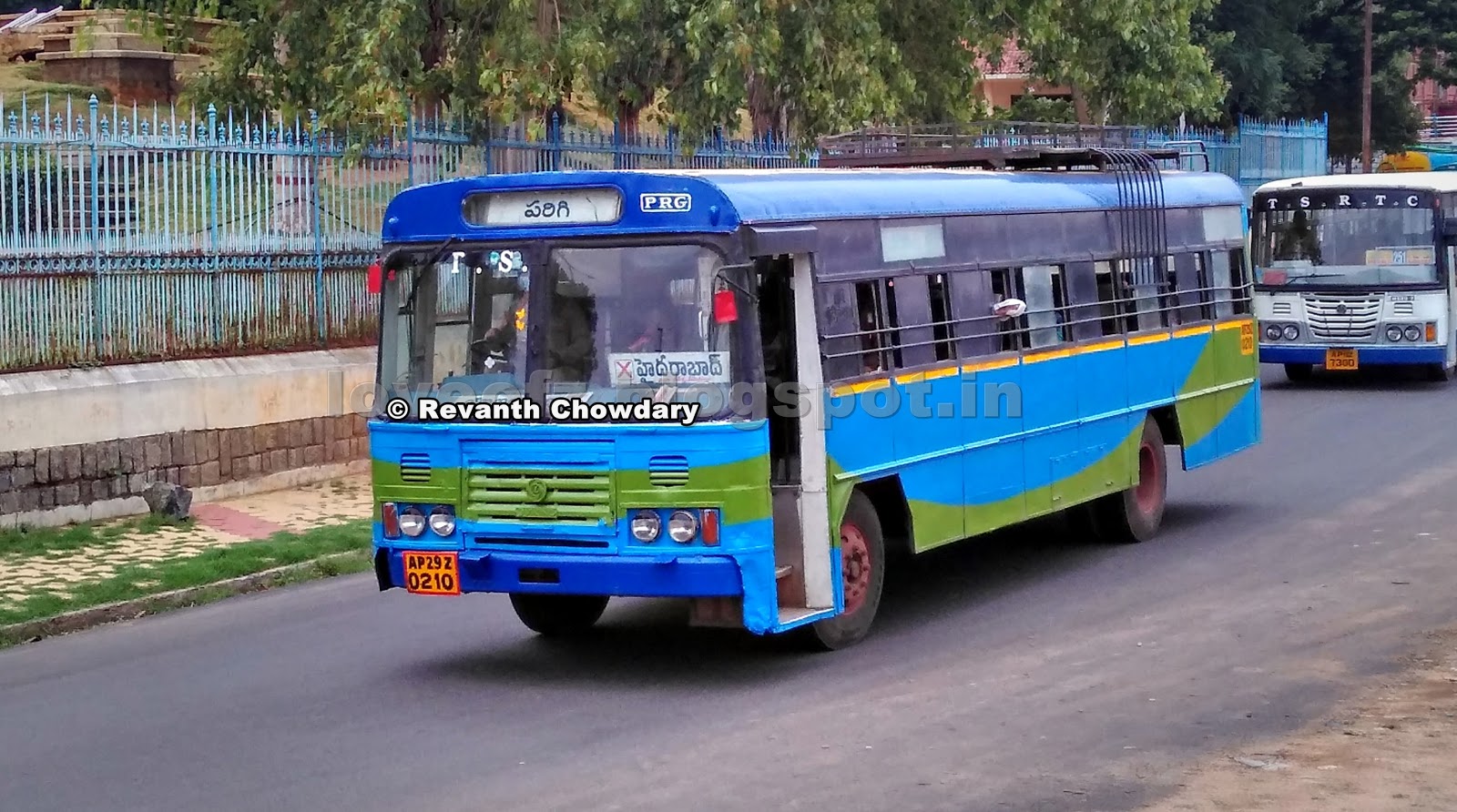
TSRTC SEMI-EXPRESS Bus from Parigi depot.
TSRTC SEMI-EXPRESS Bus from Sangareddy depot.


Friday, June 23, 2017

11 Hacks to make most of the city buses in Hyderabad


Many of you might hate taking the bus. Some of you might want to take the bus. You might think they are always full and unreliable. I take the bus every time I have to travel in the city. Nothing should stop you from taking the bus. to make most of the city buses in Hyderabad, Read for a few minutes. #Please.

  1. Choose your bus wisely

TSRTC operates 6 brands of buses in Hyderabad and some routes have almost of them running parallel. Choose your bus wisely. Don’t board ordinary buses for long distance journeys. They will only make your travel time longer. Don’t board Deluxe buses for short distances. You will end up spending more.

  1. Choose a better route

Don’t board long distance suburban buses for short trips. Chances are they will get busy by the time you have to get off the bus. Always board a city bus on a shorter route. It is always better if your stop is closer to the destination, you don’t have to fight to get off the bus.
Consider you are traveling from Khairatabad to Koti, board a 218 terminating at Koti instead of a 218D which terminates at Dilsukhnagar. Buses on route no 218 start getting empty after Lakdikapul whereas buses on 218D start getting full at the same place.  

  1. Wait for the direct bus

Changing buses in peak hours is painful sometimes. Avoid doing that. Wait for the direct bus. Board bus at the start point if they are full.
If you are traveling back home from  Hitec City to Dilsukhnagar, don't be lured by the occasional empty 127K. It is painful to transfer at Koti in the evenings. Wait for 127K/V instead. Board the bus at Kondapur if you think it will be busy by the time it reaches Hitec City.

  1. Wait for the next bus

Some routes are served frequently. In such cases, let the first bus go. Wait for the next one. That one might not be as busy. You’ll travel in peace.
Say you are traveling from Dilsukhnagar to Ramnagar, don’t hop on the first 107V/R if it is busy. Wait for the next one. That one might not be as busy.

  1. Don't wait for the direct bus

There is always more than one way to travel. Look for alternatives. Be prepared to change buses more than once. You'll save time.
Consider you have to go back to your home in Dilsukhnagar from Masabtank. Don't wait for any of the direct buses or attempt to make a transfer at Koti. Take a 63B mini to Afzalgunj and transfer into a 72J there. Both are frequent. Both avoid congested roads.

  1. Shortest route is not always the quickest

Few routes may look shorter than others on paper but they are not always quick. Make your own judgments about traffic, board a bus that’ll take you to your destination quicker.
Say you have to reach Apollo Hospitals in Banjarahills from Koti. Take the 127K/Z if you can. They take a longer route via road no 10 when compared to the regular 127K on road no 12 but reach Apollo earlier.

  1. Never board at 2nd or 3rd stop of a bus (in peak hours)

Say you have to travel from Dwaraka Nagar/Kothapet to Hitec city for work and are waiting for the bus at Dwaraka Nagar, chances are the bus is going to come full. Board a 222L going towards LB Nagar and continue in the same. You'll get a seat. Trust me it is worth duplicating the trip up to 20 mins when your travel time is more than  an hour

  1. Travel light but don't worry if you have luggage

It is always good to travel light but what if you have to carry a big package to work or you are shifting Hostel (may be ). Observe the buses. Almost all of them have safe spots to dump your luggage.

  1. Always have a bus pass

If you are a frequent traveler in the bus It is a No brainer that you should buy a pass. If you travel once in awhile buy the 24-hour pass. You will save money. Moreover, Bus passes let you make all the journeys in peace and make transfers hassle free.

  1. Never lose the ticket

Don’t panic if you forget your luggage in the bus. Bus number, depot name and driver/ conductor’s employee IDs are printed on your ticket. If you are traveling by a bus pass remember to at least make a note of the depot name. It is always painted on the front and rear next to destination board. Call the depot manager and they will coordinate with the driver/ conductor to find your luggage.

  1. Be nice to the crew

If you travel regularly on one particular bus chances are the crew is same every day. Talk to them, exchange numbers. They will keep you updated about the service.
  
Bonus Tip: Know your territory

None of the tips I mentioned earlier will work if you don't know your territory. It will help make your journeys better. Nothing should make you not take the bus. Understand the network and make the most of it.

Happy journey!

Written by Ratnam with inputs from Revanth


  • Creative Commons License

  • LoveofZ is licensed under a Creative Commons Attribution-NonCommercial-ShareAlike 4.0 International License
  • .